
Why Your Cat is Scared of Their New Fountain (and How to Fix It)
am Feb 24 2026
The Ultimate Guide to Feline Hydration Transitions
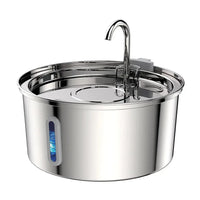
As a dedicated cat owner, you’ve done your research. You know that feline dehydration is a silent killer, often leading to chronic kidney disease (CKD) or feline lower urinary tract disease (FLUTD). You’ve invested in a top-rated, stainless steel, ultra-quiet cat water fountain, envisioning your feline friend sipping gracefully from a bubbling brook.
Instead, the moment you plugged it in, your cat bolted from the room as if they’d seen a predator. Now, that expensive fountain sits in the corner, ignored, while your cat stubbornly begs for a drip from the kitchen faucet.
Why does this happen? Is your cat just being "difficult"? The answer lies deep within feline evolutionary psychology and sensory biology. In this comprehensive guide, we will dissect the root causes of "fountain phobia" and provide a scientifically backed, step-by-step protocol to turn your fearful feline into a hydrated, happy camper.
The Evolutionary Psychology of "Fountain Phobia"
To solve the problem, we must first understand the "Why." Cats are not just small dogs; they are mesopredators—animals that are both hunters and prey. This duality makes them hyper-vigilant about changes in their environment.
1. Neophobia: The Fear of the New
In the wild, anything "new" is a potential threat. A new object in their core territory that hums, vibrates, and spits water is, by definition, suspicious. This neophobia is a survival mechanism that has kept felines alive for millennia.
2. Auditory Hypersensitivity
While humans hear sounds up to about 20,000 Hz, cats can detect frequencies up to 64,000 Hz. The "whisper-quiet" motor you bought might be emitting a high-pitched electromagnetic hum or a mechanical vibration that sounds like a roaring chainsaw to your cat’s sensitive ears.
3. Whisker Fatigue and Sensory Overload
A cat’s whiskers (vibrissae) are sophisticated sensory organs. If the fountain's design is too narrow, the whiskers touch the sides every time the cat tries to drink. This causes whisker fatigue, a state of sensory overload that can lead to significant stress and food/water avoidance.
Top 5 Reasons Your Cat is Rejecting the Fountain
Before we jump into the fix, let’s audit your current setup. SEO data shows that most "fountain fails" stem from these five common mistakes:
1. The "Buzzing" Pump (Sub-par Engineering)
Cheap plastic fountains often use low-quality pumps that vibrate against the casing. This mechanical resonance creates a "scary" environment.
-
The Fix: Look for brushless motors and fountains with silicone dampeners.
2. Placement Near the "Danger Zone"
Most owners place the water fountain next to the food bowl or, worse, the litter box.
-
The Science: Instinctively, cats avoid drinking water near their "kill" (food) to prevent bacterial contamination. Furthermore, no cat wants to drink where they eliminate. This is a major trigger for behavioral rejection.
3. The "Splash" Factor
Some fountains have a "free-falling" stream (like a faucet). While some cats love this, fearful cats may hate the splashing droplets hitting their nose or eyes.
4. Chemical Odors (BPA and Off-gassing)
New plastic fountains often have a strong chemical smell. A cat’s sense of smell is 14 times stronger than a human's. If it smells like a factory, they won't drink from it.
5. Lack of "Escape Routes"
If a fountain is tucked into a tight corner, a cat feels trapped while drinking. Since drinking requires lowering the head and losing visual contact with the room, they feel vulnerable to "ambush" (even if the only predator is your toddler or a vacuum cleaner).
The Step-by-Step Acclimation Protocol (The "Fountain Master" Method)
This is the core of our guide. Do not rush this process. Success requires patience and positive reinforcement.
Phase 1: The "Inanimate Object" Phase (Days 1–3)
Goal: Normalize the fountain’s presence without the "scary" water part.
- Step: Place the fountain in its permanent location (away from food and litter). Do not plug it in. * Action: Place high-value treats (freeze-dried chicken or tuna) around the base of the fountain. Let your cat sniff it, rub against it, and realize it doesn’t bite.
- Critical Note: Keep the old water bowl in its original spot. Never force a transition by removing the old source.
Phase 2: The "Silent Stream" Phase (Days 4–7)
Goal: Introduce water without the vibration of the motor.
- Step: Fill the fountain with water but keep the power off.
-
Action: Cats are naturally curious about "still" water in new vessels. If they drink from it, reward them immediately.

Phase 3: Controlled Exposure (Days 8–14)
Goal: Introduce the sound and movement.
- Step: Plug the fountain in for only 30 minutes at a time while you are in the room.
- Action: Use a "bridge" to attract them. Some owners find that adding a tiny bit of low-sodium chicken broth (no onions/garlic!) to the water for one afternoon can entice even the most skeptical cat.
- Pro Tip: If your fountain has an adjustable flow, set it to the lowest, quietest setting.
Phase 4: Full Integration
Once you see your cat drinking confidently while the motor is running, you can begin to slowly move the "old" water bowl closer to the fountain, and eventually, remove it altogether.
Technical Comparison: Stainless Steel vs. Ceramic vs. Plastic
| Feature | Plastic Fountains | Stainless Steel | Ceramic Fountains |
| Durability | Low (scratches easily) | High (indestructible) | Medium (breakable) |
| Hygiene | Porous (traps bacteria) | Non-porous (hygienic) | Non-porous |
| Acne Risk | High (Feline Acne) | Zero | Zero |
| Noise Level | Tends to vibrate | Quietest with dampeners | Very quiet/Heavy |
| Aesthetics | Basic | Modern/Industrial | Artistic/Zen |
Expert Recommendation: If your cat is particularly fearful or prone to skin issues, 304 Food-Grade Stainless Steel is the gold standard. It doesn't hold odors, it's easy to sanitize in the dishwasher, and it provides the cleanest taste.
Maintenance for Long-Term Success
A fountain that isn't maintained will eventually become noisy and smelly, leading to a "relapse" in your cat’s fear.
-
Deep Clean the Pump: Every 2 weeks, take the pump apart. Use a small brush to remove hair and slime from the impeller. A clogged pump is a noisy pump.
-
Filter Rotation: Change the activated carbon filters every 2–4 weeks. Old filters can make the water taste bitter.
-
Hard Water Solutions: If you have hard water, scale buildup can cause the motor to grind. Use a 50/50 water and white vinegar soak to dissolve calcium deposits once a month.
Frequently Asked Questions
Q: Can a cat water fountain cause feline acne?
A: Yes, if it is made of plastic. Plastic develops microscopic scratches that harbor bacteria. Switching to stainless steel or ceramic usually resolves this.
Q: How do I know if my cat is dehydrated?
A: Perform a "skin tent" test. Gently pinch the skin between the shoulder blades. If it snaps back instantly, they are hydrated. If it stays "tented," they need fluids immediately.
Q: Why does my cat still prefer the sink?
A: The sink offers a high vantage point and a fresh, cold stream. Ensure your fountain is elevated or placed in a way that gives the cat a "king of the castle" view of the room.
Conclusion: Patience is the Greatest Gift
Transitioning a cat to a water fountain isn't just about buying a gadget; it's about environmental enrichment and long-term health. By understanding their sensory world and following a gradual introduction protocol, you are adding years to your cat’s life by protecting their kidneys and urinary system.
Remember, every cat is an individual. Some may take two days, others may take two months. Stay consistent, stay positive, and keep the treats flowing!
Teilen